Sneha Shrestha
aka IMAGINE

Sneha Shrestha, known artistically as IMAGINE, is a Nepali artist whose practice bridges her native Devanagari script with the visual language of graffiti handstyles. Her work advocates for the preservation of living cultures within contemporary art, insisting that language, ritual, and memory remain active and not just archival. Working across painting, murals and sculpture, Shrestha moves between meditative abstraction and large-scale public intervention. Sneha is the first contemporary Nepali artist to be included in the Museum of Fine Arts, Boston’s Permanent Collection with her painting Home416. She has been awarded the esteemed James and Audrey Foster Prize by the Institute of Contemporary Art (ICA), Boston. Sneha’s sculpture, Dwarpalika, was recently acquired by the Harvard Art Museums and is currently on long term view on the second floor. Her new public art sculpture “About a Living Culture” in Queens, New York was included in Our Culture magazine’s 5 Innovative Examples of Public Art. Her monumental sculpture, Calling the Earth to Witness, was commissioned by the Isabella Stewart Gardner Museum, adding another milestone to her evolving practice.
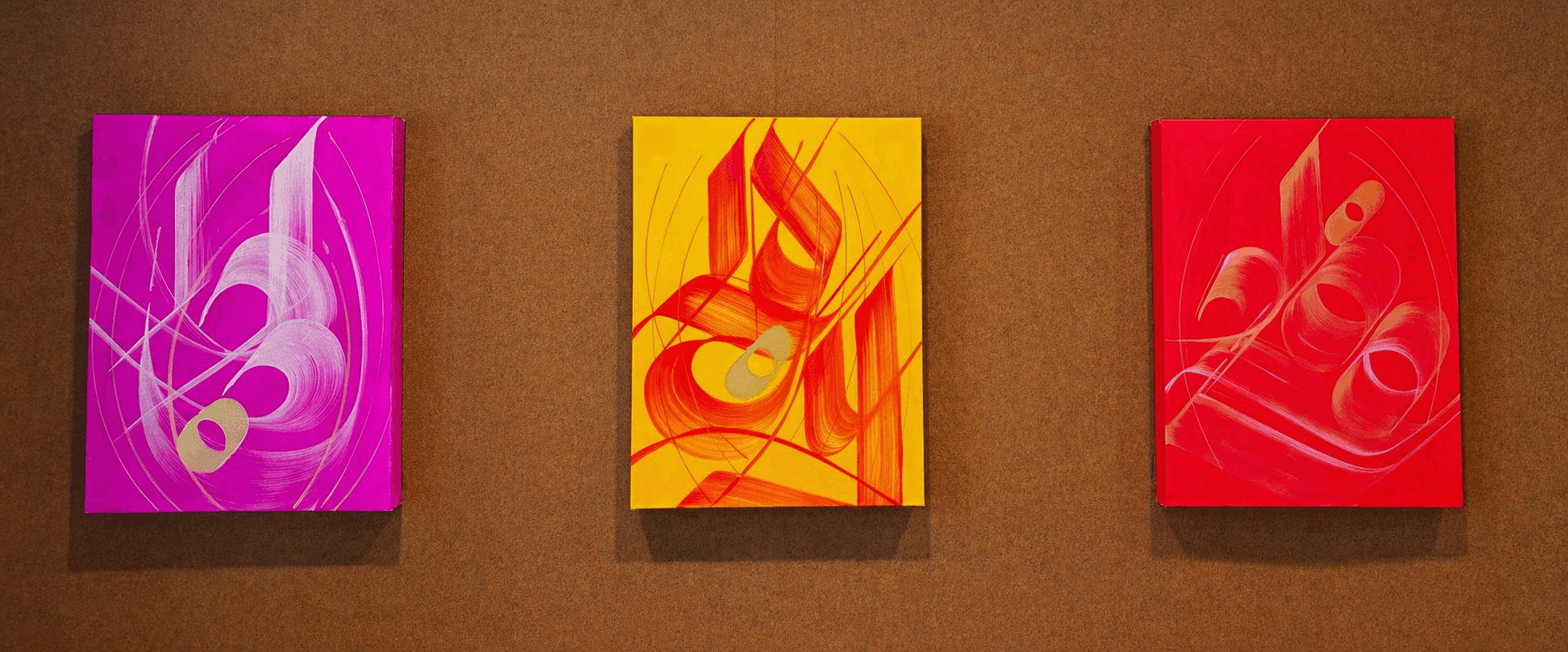
Celebration Series
IMAGINE
2025
Acrylic on Canvas
These are paintings from IMAGINE’s Celebration series that reflect on her time spent away from family after leaving her hometown of Kathmandu. Each painting incorporates the names of immigration documents completed over many years, transforming bureaucratic codes into Nepali calligraphy. The colors are drawn from photographs of her mother dressed for celebrations she missed at home, honoring the caregivers who hold family and tradition together across distance.
“In a space of gathering and nourishment like AMA, I hope these paintings hold space for caregivers, migration, and belonging, offering warmth and connection alongside the act of coming together to share a meal.”

Alison Croney Moses
Alison Croney Moses is a Boston based artist whose wooden objects engage the senses through form, texture, color, and material. Raised in North Carolina by Guyanese parents, she draws on a childhood shaped by making, where clothing, food, furniture, and art were deeply woven into daily life. Her work explores family, relationships, pregnancy, childbirth, safety, and care, creating space for dialogue, connection, and healing around deeply personal experiences. Alongside her studio practice, she has spent over 15 years creating educational opportunities through teaching, program development, and nonprofit leadership to support artists and makers of all ages. Her work is held in major museum collections, and she has received wide recognition, including the 2023 Boston Artadia Award, the 2022 USA Fellowship in Craft, and the 2025 Foster Prize at the ICA Boston.
In Support of Each Other
Alison Croney Moses
2026
Walnut Wood, Aluminum and Steel Hardware, Milk Paint
We build this vessel through the action of coming together, creating moments that hold us tighter and others that give us space. Our care for each other shapes these moments to be what we all need.
Nina Bhattacharya
aka Radio Rani
Nina Bhattacharya, also known as Radio Rani, is a Boston based artist, therapist, and educator whose work centers connection, care, and liberation across communities. Through digital collage, facilitation, and interdisciplinary creative practice, she explores spirituality, memory, and collective wellbeing with tenderness and depth. Her artwork has been shown at institutions including the ICA Boston, the MFA Boston, and Harvard University, and her broader practice spans teaching, podcast production, and community building.
Payal Kumar
Payal is a multidisciplinary cultural worker and abortion doula whose practice is rooted in the in between spaces of identity, care, and resistance. Based on Massachusetts, Pawtucket, and Wampanoag territories, their work spans illustration, zines, spoken word, and workshops that center intergenerational community building and imagine possibilities beyond borders, capital, and medical violence. Their work has appeared everywhere from grassroots protests and Chinatown walls to institutions such as the Museum of Fine Arts, Tufts, and MIT, and has been recognized by the 2024 Harvard Ed Portal Artist Pipeline Program and the Boston Foundation’s Live Arts Boston grant.
“At Ama at the Atlas, every person carries a story of a caregiver with them who shapes their own journeys as caregivers. Our collaborative pieces uplift these beautiful intergenerational stories and seek to ground the space in what is often unseen. We drew on sense memories elicited during a December 2025 workshop with staff to design pieces that make visible the care, dignity, and labor at the heart of nourishment.”
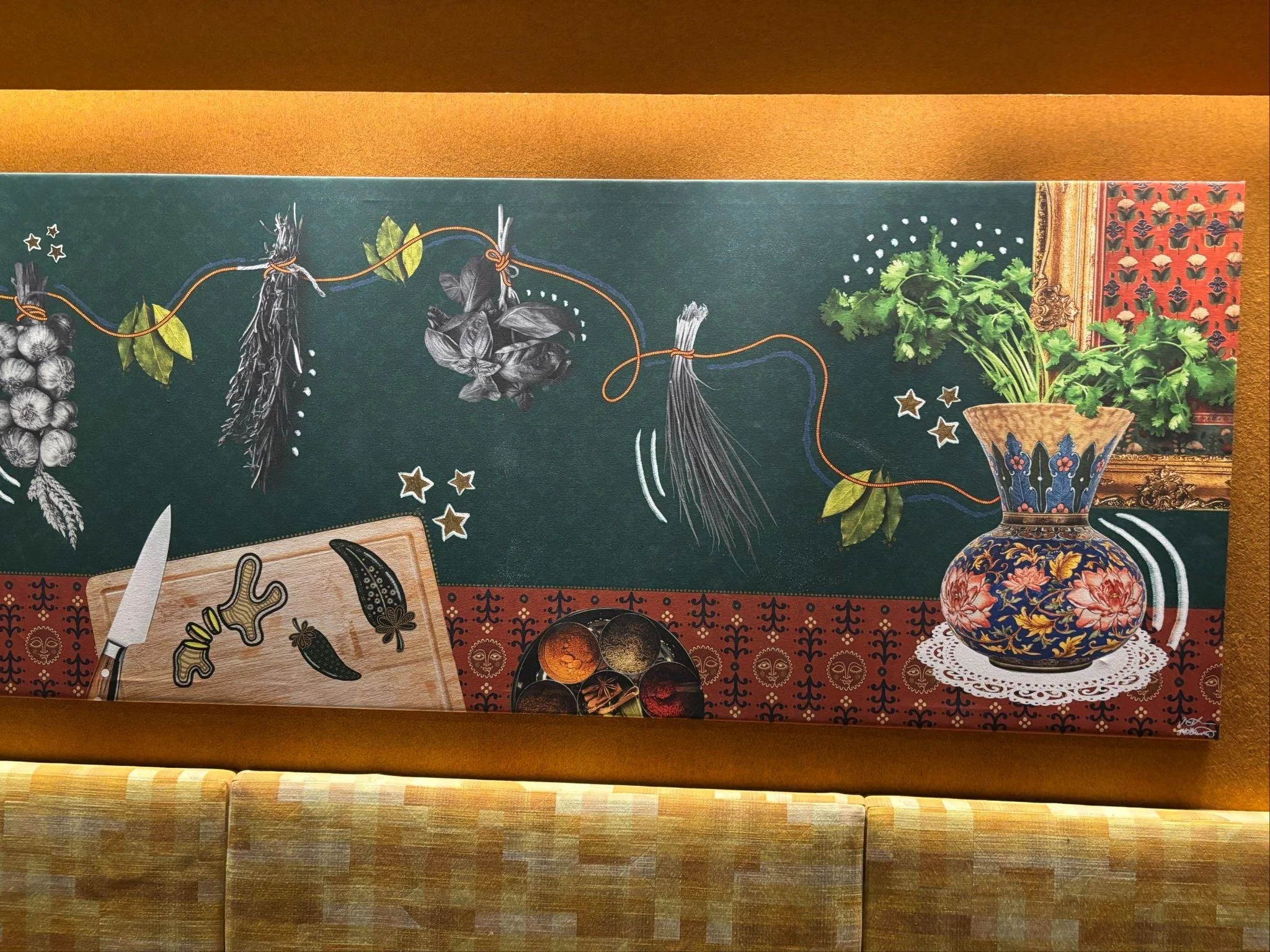
Flavors of Care
Nina Bhattacharya & Payal Kumar
2026
Digital Collage and Illustration,
Gold Ink on Canvas
A cutting board with ginger and jalapeños, a masala dabba filled with spices, and bundles of aromatics hanging overhead evoke a kitchen shaped by care. Drawn from memories shared by Ama and the Atlas staff during a workshop in December 2025, these elements capture a moment dense with possibility—where the cook is absent, yet their presence is felt in every detail. The scene invites reflection on the sensory traces of making: what scents and ingredients evoke, for you, both being cared for and caring for others?
Brewing the Invisible
Nina Bhattacharya & Payal Kumar
2026
Digital Collage and Illustration,
Gold Ink on Canvas
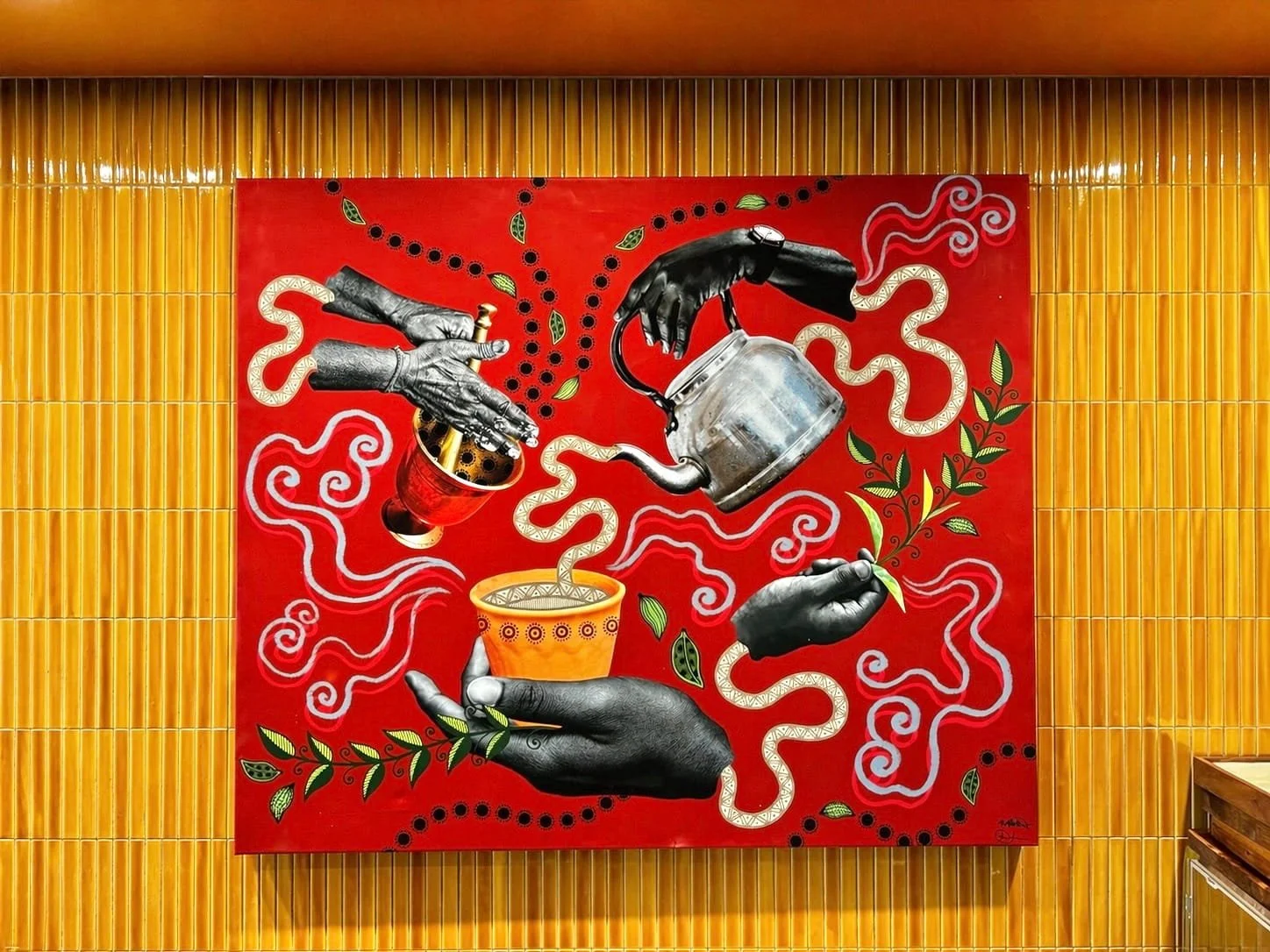
Where does the labor behind a cup of masala chai begin? This work traces the layered, often unseen processes that sustain it—from plucking tea leaves to grinding spices, brewing, and pouring. Strings of peppercorns and cardamom pods interweave with playful streams of chai, disrupting any sense of linearity while honoring the skilled hands that make this beloved beverage possible. Drawn from memories shared by Ama and the Atlas staff during a workshop in December 2025.
Hands That Nourish
Nina Bhattacharya & Payal Kumar
2026
Digital Collage and Illustration,
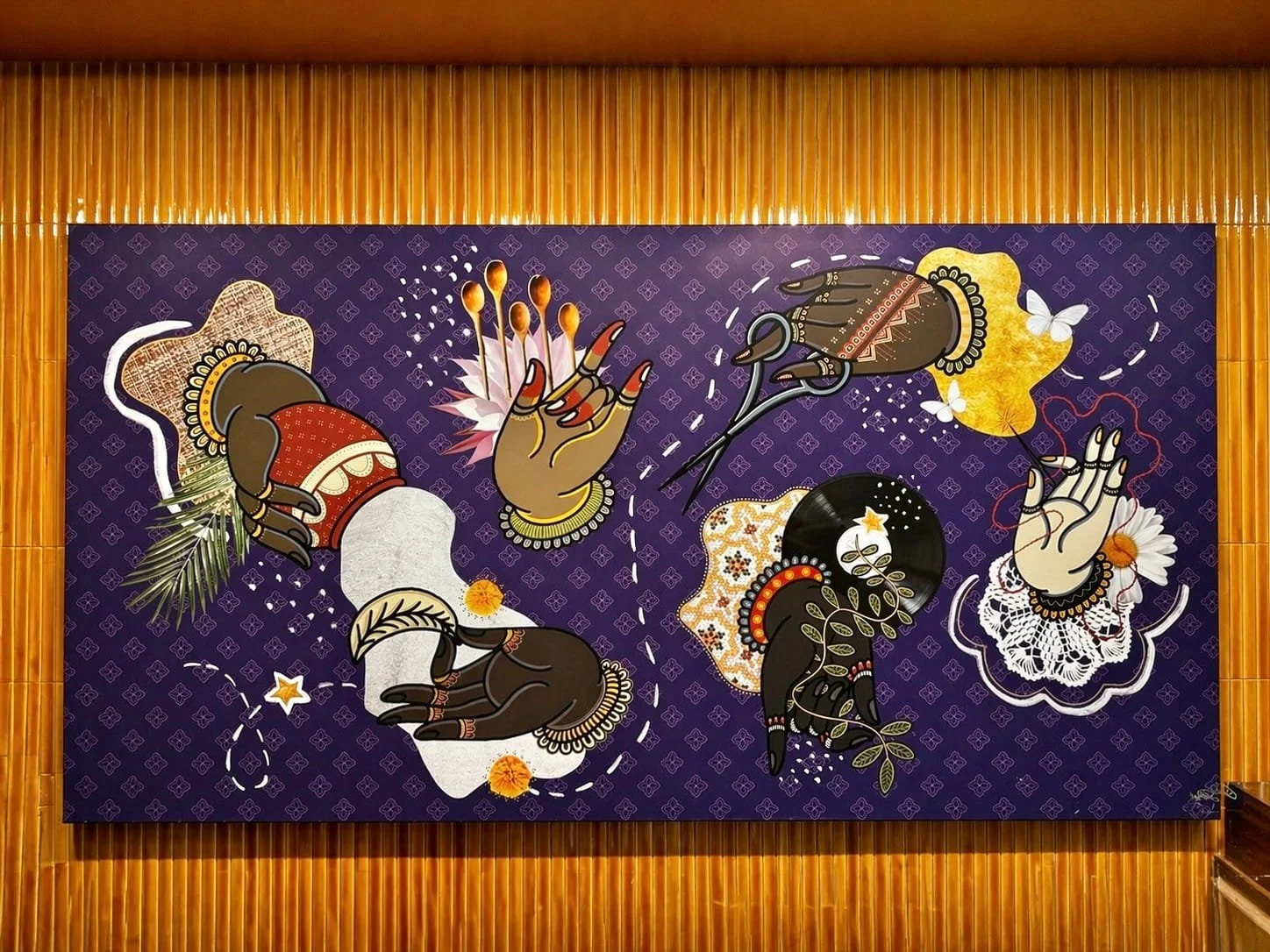
Gold Ink on Canvas
The world begins at a kitchen table,” writes Indigenous poet Joy Harjo. Drawing on stories gathered in a workshop with Ama and the Atlas staff, this artwork collages together memories of caregivers—sewing at the table, folding momos, seasoning a dish just so—with visual motifs inspired by North Indian folk traditions.